The Difference Between Being Called a Prince on the Outside and the Inside


Most women, I think, want to be called cute.
Not just in appearance. In the way they think, the way they respond, the small choices they make without announcing them.
That’s so like you — in the best way. You’re kind of adorable when you do that.
There is something most of us never stop wanting in that particular kind of recognition.
And yet.
There are other moments — moments when you handled something difficult, when you showed up for someone who needed you, when you did the thing that needed doing without waiting to be asked —
and someone said:
You’re so dependable. I knew I could count on you. Honestly? You’re kind of amazing.
A different kind of warmth. Not cute. Something closer to respected.
And that feels good too. Genuinely good.
So why does Yoi Takiguchi — a girl who is called a prince — carry that word like a weight she cannot put down?
When the Outside Gets Decided for You
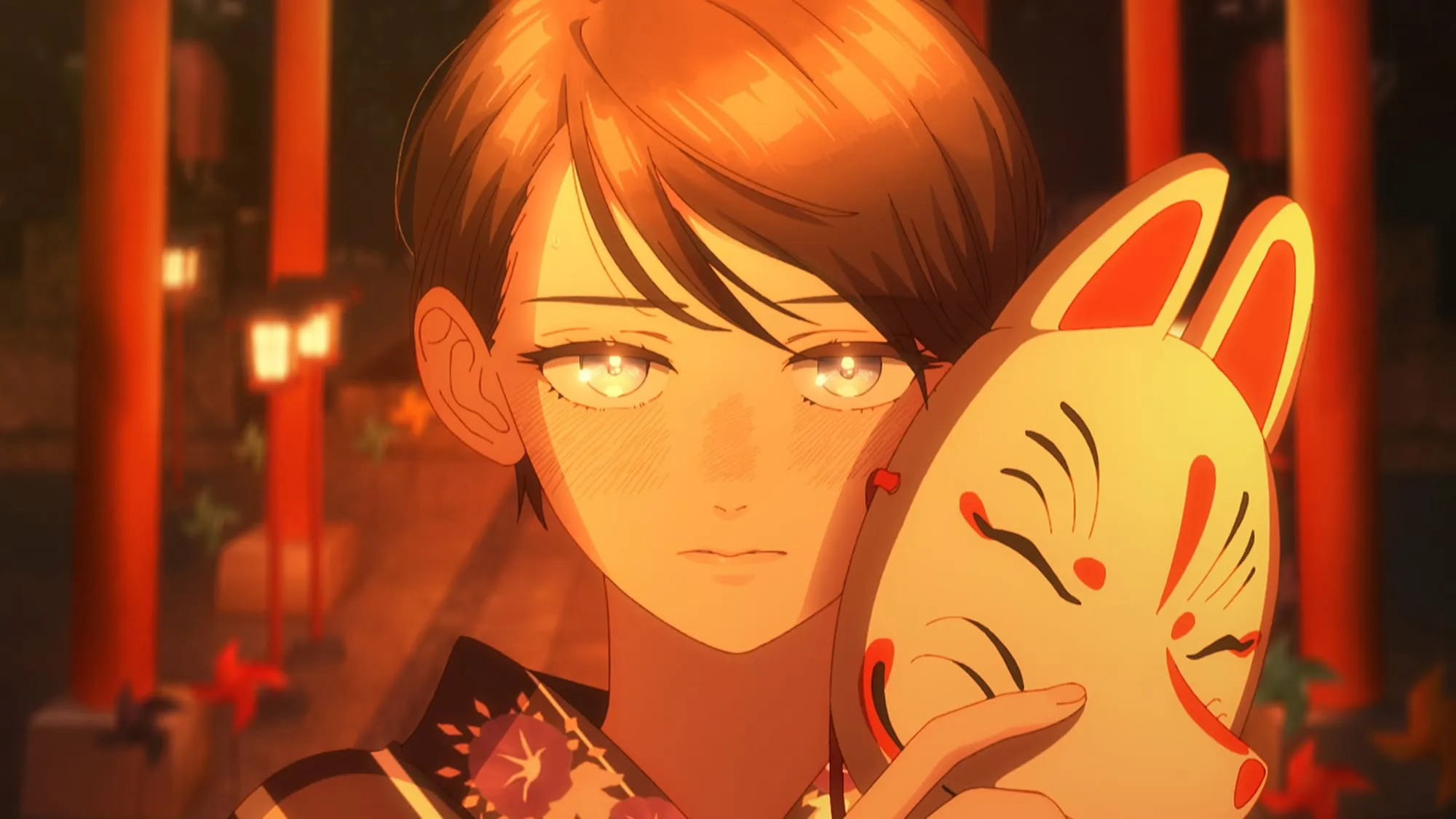
Yoi is called a prince because of how she looks.
Tall. Low voice. Sharp features that people describe as princely. The way she carries herself — composed, unhurried, always seeming to know what to do.
She did not choose any of this.
She did not wake up one day and decide to be the cool one, the admirable one, the one that others look up to from a careful distance.
It was decided for her — gradually, by accumulation, until the label was simply there, fixed and unargued with.
And that is where the trouble lives.
She is being defined by something she never chose.
Her height is not a decision. Her voice is not a decision. The particular sharpness of her face is not a decision.
No matter how she feels on the inside — no matter how much she might want to be seen differently — the moment someone looks at her, the verdict is already in.
There is no escape from that. And the absence of escape is its own kind of exhaustion.
What It Would Mean to Be Called a Prince on the Inside
Here is what I keep thinking about.
What if Yoi had been called a prince not because of how she looked, but because of who she was?
Her sense of responsibility. Her inability to walk past someone who needs help. The quiet, consistent way she shows up — not for recognition, but because it is simply what she does.
That’s so prince-like of you. Said about a choice. A quality. Something she built.
Would she carry the word the same way?
I don’t think she would.
When someone recognizes your interior — your values, your habits, the way you have chosen to move through the world — that recognition lands differently.
It is yours. You earned it. You could, theoretically, be proud of it.
It is not a verdict handed down by appearance. It is a reflection of something you actually chose.
The Same Word. Completely Different Weight.
Prince.
The word is the same in both cases.
But where it lands changes everything about what it means to receive it.
A prince on the outside is armor. Armor you did not ask for, did not put on yourself, and cannot take off — because it is not actually armor. It is just how you look.
A prince on the inside is something closer to a medal. Imperfect, maybe a little embarrassing to be handed, but yours. Evidence of something you chose to be.
What Yoi is carrying is not, I think, a hatred of the word itself.
It is the specific exhaustion of being defined by something that was never hers to decide.
“I know better than anyone that the heroine role doesn’t suit me.”
That line — the first real thing we learn about her — is not about her appearance.
It is about the distance between how she is seen and who she actually is.
What Kohaku Actually Gave Her

This is why his words land the way they do.
“You are incredibly beautiful.”
It is still about the outside. He is still looking at her face, her presence, the way she stands.
But he does not say prince.
He does not reach for the category that everyone else has agreed to use.
He just looks at her — this specific person, in this specific moment — and says what he sees.
Not a label. Not a verdict. Just attention.
For someone who has spent years being categorized before she has had a chance to be known, that distinction is not small.
It is, in fact, everything.
You Might Know This Feeling

Maybe you have been the dependable one. The responsible one. The one your friends call when something goes wrong, because they know you will know what to do.
And maybe that has felt good — genuinely good — in the moments when it was chosen, when it came from something you built in yourself.
And maybe it has also felt, sometimes, like a box.
Not because the qualities are wrong. But because being known for them — being expected to be them, being seen as nothing outside of them — starts to feel like a definition you did not write for yourself.
The relief is not in being seen as weak. It is in being seen as more than one thing.
In being looked at by someone who does not already know what category to put you in.
Yoi finds that in Kohaku.
Not because he solves anything. But because he looks at her before he has decided what she is.
And that, for someone who has been decided upon for years, feels like the first breath of something.
Closing
Wanting to be called cute and wanting to be called dependable — these are not contradictions.
Both are real. Both matter.
The difference is not in the quality of the recognition. It is in whether the recognition belongs to something you chose, or something that was chosen for you.
Yoi’s story is, among other things, about that difference.
About what it costs to be defined from the outside. And about what it feels like when someone finally looks before they decide.
✅What Is In the Clear Moonlit Dusk? Plot, Characters & Why Fans Love It
I enjoyed this article. Being defined from the outside can rob a person’s of their agency. You take that back by being true to who you are. When someone really sees you or at least don’t define you from the outside, that is special.
i recommend revolutionary girl utena or rose of versallies if you like female mcs with a prince vibee